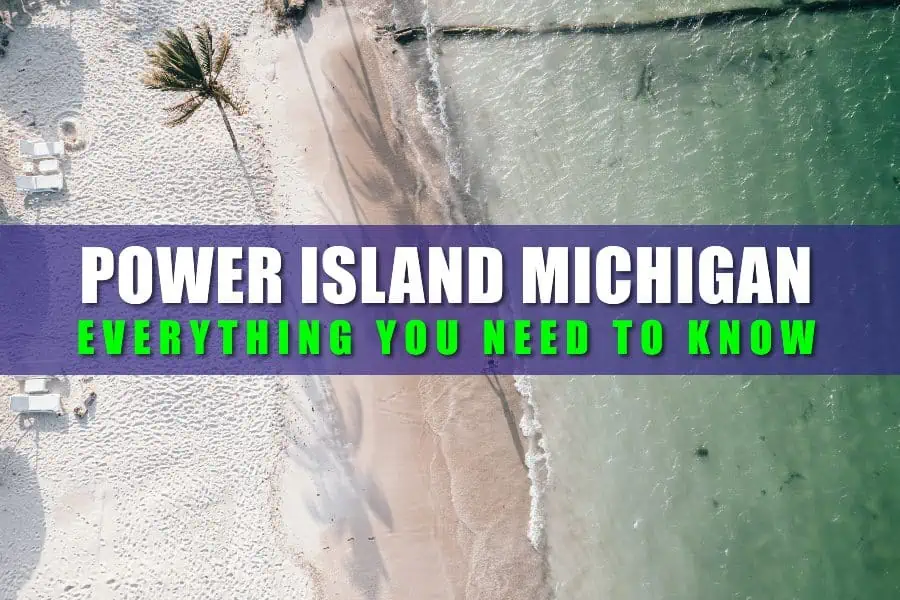


Power Island Michigan is a 200-acre island once owned by Henry Ford. It’s one of the must-visit recreational islands in the state, and was once known as Marion or Ford Island.
Glen and Annette Power gifted Power Island to the public. But today, the island is managed as a public park owned by the Grand Traverse County.
This gorgeous island has everything. It boasts a swimming beach, sandy beach, hiking trails, a dock, maple and beech forest.
Another thing that sets the island apart is the color of the water. It is surrounded by blue water that instantly reminds you of the Caribbean.
Here, we’ll discuss Power Island, its history, things to do, and more. So, keep reading to uncover more about this island.
History of Power Island Michigan
Power Island is located in Michigan and occupies 200 acres of land. It boasts 3 miles of water in West Grand Traverse Bay, including hiking trails of over 5 miles.
There is a lot to do and see on this island. It is massive and features enough space for visitors and residents to have fun. You can organize picnics or take advantage of the sandy beaches.
Now, how was this incredible island uncovered? When you read the history of this island and visit to see things for yourself, you’ll understand why many people consider it a must-visit.
Andrew Jackson Blackbird, also called Makade-binesi, an Odawa tribe leader and historian, was the first to have reportedly spoken about this island. He wrote about the island in the late 1800s.
Blackbird referred to a small island to the west of the Old Mission Peninsula. The Odawas also owned and controlled the island, since it was in their territory. But, unfortunately, circumstances forced them to change ownership of the island.
The Odawas had an issue with the Ojibwe in the 1800s. And according to Blackbird, the Odawa knew they had to make peace with the Ojibwe and used the Power Island.
Henry Schoolcraft was another person that spoke about this island. Schoolcraft visited the area in 1837, noting the island, including Bowers Harbor.
This island was captured in the official maps and named Island No. 10 in 1850. Then, in 1852, Orange Risdon surveyed the island and had only nice things to say about it.
Risdon called the island “handsomely situated for a retirement farm.” But he didn’t live on it despite acknowledging its handsomeness.
Instead, McKinley Wilson was the first European to reside on the island. He started living on the island in 1850 and left after two years. The self-proclaimed “King of Beaver Island,” James Strang, was among the people who acknowledged the island’s beauty in the 1850s. Strang noted that the island was beautiful and ideal as a residential area.
Strang died a couple of years later, and after his demise, it became clear to many people that what he was saying about the island was a fact. Several Mormons from Beaver Island considered Strang’s word and moved to Bowers Harbor, the closest settlement to the island.
Why Was Power Island Michigan Named Eagle Island And Hog Island?
Power Island was officially named Eagle Island because of the many bald eagles, including crows on the island.
The island had diverse names in the 80s, and the reasons are apparent. Such a beautiful place is indescribable. Even the United States government had to rename it in the 1860s.
Instead of Eagle Island, the government changed the name to Harbor Island. But the locals had other plans. Instead of Harbor Island, they changed its name to Hog Island.
The locals named it “Hog Island” because of the massive number of hogs visiting the area to feed on local flora.
Who Was The First To Purchase Power Island Michigan?
The Hall family was the first to purchase Power Island. They bought the island from the previous owners and changed its name.
The Hall family wasn’t comfortable with the name “Hog Island.” They believed such a beautiful island should have a much better name.
So, the island’s new name became Marion Island.” The Hall family of Ionia gave the name to honor their youngest daughter. However, they sold the island to Ford in 1917, and Ford had to change the name entirely again.
Marion Island’s new name was now “Ford Island.” Ford also invited prominent people to the island as its own. These include people like former president Theodore Roosevelt and Warren G. Harding. In addition, Babe Ruth visited the island following an invitation from Henry Ford.
The Rennies of the Rennie Oil Company bought the island in 1944 from Henry Ford and renamed it “Rennie Island.” Then, in 1987, the island became Grand Traverse County’s property and a public park.
After having so many names, the island was finally renamed “Power Island.” It was renamed after Eugene Power, a native and frequent visitor.
Is Power Island Michigan Great For Recreational Activities?
Power Island is a must-visit if you’re looking for a place to have fun and enjoy water sports. It is an excellent destination for people seeking a place to have fun.
The surrounding water is one of the features that set this island apart. It is clear and Caribbean blue. There are so many things to explore on this island. You can go fishing, swimming, kayaking, hiking, boating and more.
The island’s central hill boasts approximately five miles of walking and hiking paths. Other outdoor activities include birding, hunting, picnicking, dog walking, and nature watching. The Power Island’s campsite is a famous destination for visitors and residents.
How can you get to Power Island, Michigan? Boats moving to this island leave from several destinations. They can come from Bower Harbor Marina, about three miles east. Another destination the boats can travel from is the Clinch Park Marina in Traverse City, which is 6.5 miles south.
Things You Can Do On Power Island
There are tons of things you can do in Power Island. You can camp, bird watch, hunt, fish, and engage in water sports.
Check out the things you can do on this amazing island.
1: Embarking on bow hunting:
Are you a great bow hunter? If yes, consider hunting when you visit this island. Hunting is one of the fun-filled activities you can embark on when you visit Power Island. You can hunt deer, but note that firearms aren’t allowed.
The reason firearms aren’t allowed is to curb over-hunting, limiting the deer herd in the region. So, the island is open for bow hunting, and you don’t need to register to start your hunting expedition. However, whenever you harvest a deer, ensure that you report it to Park and Recreation. You can ask residents in the area for more information about the hunting rules on the island.
A Handy Tip: You won’t find bears on this island. However, it would help if you took precautions to protect your food from rodents, chipmunks, and raccoons.
Herons, bald eagles, and ospreys call this island their home. So, if you’re lucky, you might spot them.
2: Food and lodging options:
Are you thinking of what to eat and where to lodge on Power Island in Michigan? Traverse City offers diverse lodging options, and you can find a place to eat delicious meals too.
3: Hiking Trails:
Hiking is another engaging activity in this area. So, if you’re a hiker, visiting Power Island should be at the top of your to-do list.
Power Island is 200 acres in size. So, it has about six miles of hiking trails you can explore. The trails also vary from hilly to flat, making every trip physically challenging and memorable for hikers.
This island also has several unmarked and orphaned trails. So, prepare your mind to take your hiking expedition to the extreme. Note that the highest point is 689 feet above sea level.
A Handy Tip: An isthmus connects Power Island to Basset Island. Thus, reaching Basset Island from Power Island is a short walk.
4: Enjoy the sandy beaches
The sandy beaches on Power Island cover almost the whole shoreline, offering plenty of space for sports and other fun activities.
You can play diverse sports on the beach, such as kite surfing, wakeboarding, windsurfing, stand-up paddle boarding, parasailing, and kayaking.
A Handy Tip: Remember that the west shore is a bit rockier, though there’s nothing to fear, as landings are doable.
5: Consider camping:
The Power Island is another excellent destination for camping. You’ll find 10 primitive campsites on this island’s south end. However, before you embark on a journey to camp, start planning.
Visitors to the campsites are required to make reservations before coming around. This will ensure they don’t face any disappointment when they come around. So, make your reservations if you want to camp on this island.
You can contact the Grand Traverse County Park and Recreational Department for reservations. They are the ones putting everything together on this island.
What are the things to expect on these campsites?
Firstly, the island’s campsites offer pit toilets, which are well taken care of.
Another necessity the island provides is water. It boasts a pump for drinking water, but that shouldn’t prevent you from alternative plans. You can use a water filter or purifier as an extra safety measure.
Are there mosquitoes on the campsite? Yes, they are. Prepare your mind for these parasites, and plan to shield your body from them. But there is no cause for alarm, as the mosquitoes here aren’t too bad.
How can you get firewood in Power Island’s campsites? You don’t need to fetch the wood yourself. You can buy firewood from park rangers. The firewood is cheap, and besides, you will save time and energy.
A Handy Tip: If you need a change of environment, you can visit Traverse City. The city is just 6 miles from the island’s south end and is another incredible area worth exploring.
The city does light up at night and has a vibrant nightlife. So, you can move with your partner there at night and return to the island after having great fun.
If you’re camping, here’s another benefit you will enjoy. You can park at the Bowers Harbor boat launch. The Grand Traverse County Parks and Recreation Department gives campers parking permits for overnight parking there.
6: Enjoy an amazing Kayaking experience:
Kayaking is one of the fun activities you can indulge in when you visit this island. You’ll find a couple of other kayakers like yourself, too.
Note that being able to perform a self-rescue is vital for kayakers. It is also advisable for kayakers to have a sea kayak that boasts dual sealed bulkheads, including a spray skirt.
A personal floating device or lifejacket is also a must. Ensure you’re carrying the necessary safety gear, too. For example, you need a VHF marine radio as your safety gear.
A Handy Tip: Dress for water temperature when kayaking. Note that the water temperature can be freezing.
So, endeavor to dress appropriately. Remember that hypothermia is highly likely before July, including after mid-September. Thus, a dry suit would make sense, depending on the water temperature.
Conclusion
Power Island Michigan is a 200-acre island and one of the state’s most visited recreational islands. Henry Ford once owned the island.
Named after Eugene Power, a regular island visitor, Power Island offers everything to make your outdoor experience memorable. There are diverse lodging options and diverse recreational activities you can engage in.
This island has been visited by prominent individuals such as Theodore Roosevelt, Bob Ruth, and several other former presidents of the United States of America. You can visit the island to have fun, and camp.