
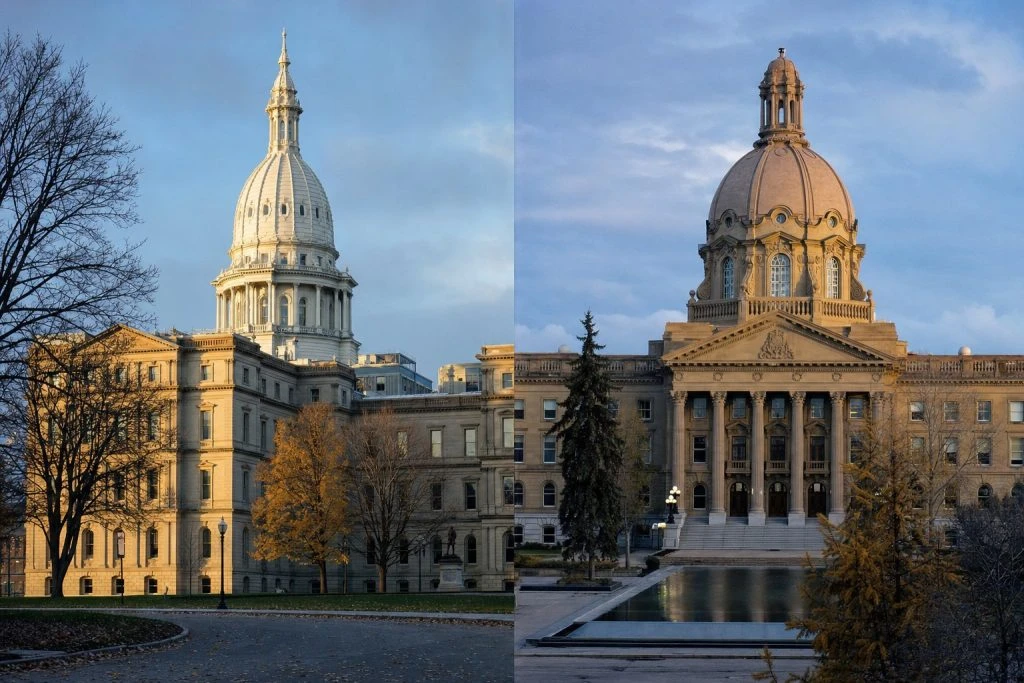
Alberta Is Doing What Michigan Did in 2021
How the province’s new online casino market compares with Michigan’s launch on licensing, revenue reporting and player protections

At noon on January 22, 2021, Michigan switched on regulated online casino gaming and sports betting after more than a year of rule-writing in Lansing. Five and a half years later, on July 13, 2026, Alberta did the same thing. The province is only the second in Canada to open a regulated, competitive online gaming market, after Ontario in 2022, and it faces many of the questions Michigan lawmakers and regulators had to answer first.
Two Laws, Two Different Starting Points
Michigan’s market rests on the Lawful Internet Gaming Act, signed by Gov. Gretchen Whitmer in December 2019. The law did not create an open market. It tied online casino licences to the state’s existing gaming interests: the three commercial casinos in Detroit and Michigan’s federally recognized tribes. Each licensee could partner with an online platform provider, which also needed approval from the Michigan Gaming Control Board.
Alberta started from a different place. Before 2026 the only legal online casino in the province was Play Alberta, run by the provincial regulator itself. The iGaming Alberta Act, passed in 2025, kept Play Alberta and opened the market to private operators under a two-part system.
Side by Side
- Launch date: Michigan, January 22, 2021 – Alberta, July 13, 2026
- Regulator: Michigan Gaming Control Board – Alberta Gaming, Liquor and Cannabis (AGLC)
- Market manager: none in Michigan – Alberta iGaming Corporation (AiGC)
- Who can apply: Detroit casinos and tribes, with platform partners – any operator that registers with AGLC and signs an AiGC agreement
- Operators on day one: 9 authorized in Michigan – about 50 registered in Alberta, with roughly 22 platforms live
How Licences Were Issued
In Michigan, the Gaming Control Board handled the whole process. It issued licences, approved platform providers, signed off on games and set the launch date. Nine operators were authorized to go live on January 22, 2021. Most were national brands working with one of the Detroit properties, such as the operator behind the MGM Grand Detroit, or with a tribal partner.
Alberta split that job in two. AGLC registers operators and enforces the rules. A separate Crown corporation, the Alberta iGaming Corporation, signs a commercial operating agreement with each one and manages the market. An operator needs both before it can take a bet. Trade reports counted 28 registered operators in May, about 50 at launch, and 31 with signed AiGC agreements by late September. That gap shows how much of the work happens after registration.
How Revenue Is Reported
Michigan’s reporting is one of the more transparent in the United States. The Gaming Control Board publishes monthly figures for each operator, listing gross receipts, adjusted gross receipts and the taxes and payments made to the state and to the City of Detroit. The first report covered just ten days, January 22 to 31, 2021, and showed $42.7 million in combined online gaming and sports betting receipts. Online casino and poker play made up $29.4 million of that. Michigan taxes online casino revenue on a sliding scale from 20 to 28 percent, depending on an operator’s annual receipts.
Alberta uses a revenue split instead of a tax table. According to the provincial government’s iGaming fact sheet, 20 percent of net gaming revenue goes to the General Revenue Fund. Another 2 percent of gross gaming revenue supports First Nations initiatives, 1 percent funds social responsibility programs, and operators keep the rest. Revenue flows through AiGC and the province’s own financial reporting. So far, Alberta has not published anything like Michigan’s monthly operator-by-operator ledger, though that could still come.
What Players Are Being Told
Lists of the best Alberta online casinos have been showing up in Canadian outlets since the summer, and they reflect how much attention the new market is getting. Most of these guides focus on which brands are available. The more lasting change is in the rules those brands now have to follow. One National Post explainer goes through how the new Alberta rules work from the player’s side, including registration, the role of AiGC and the tools operators must offer. Michigan residents saw similar coverage in early 2021, when the novelty of legal online play drew more attention than the rules behind it.
Which Player Protections Came First
The biggest difference between the two launches is the order in which protections arrived. Michigan launched with the protections in its administrative rules. Operators had to verify age and location, offer deposit limits and self-exclusion, and display problem-gambling resources. The statewide tools and responsible-gaming programs were built up over the years that followed.
Alberta started with the central system already in place. Its regulated market opened with a centralized self-exclusion program on day one. A player can use a single application to exclude themselves from every participating online site and from some land-based gaming. Operators must connect to that system before going live. They must also offer financial and time limits, give players access to their transaction history and ask players to confirm they are fit to play. Every site must also complete the Responsible Gambling Council’s RG Check accreditation.
What Michigan’s Experience Suggests
Michigan’s market grew quickly. Online casino receipts passed $1 billion in 2021, its first, partial year, and kept rising after that. Most of the later debate in Lansing was about tax rates, advertising and how much of the money reached problem-gambling programs, not about whether the market should exist. Alberta has already taken a position on some of those questions. Its advertising rules bar marketing aimed at minors or self-excluded players, and a fixed share of revenue goes to social responsibility.
The Open Question
Michigan showed that a state can bring online gambling into a regulated market and publish detailed figures about it every month. Whether Alberta’s model of a Crown market manager, a revenue split and day-one central self-exclusion holds up better is something only a few years of data will show.